
Validio has been named a Representative Vendor in the Gartner® Market Guide for Data Observability Tools (February 2026). We're proud of the recognition. But more than announcing it, we want to share what we think the report actually says about the state of the market, and what it means for data teams navigating it right now.
The category has reached a tipping point
The numbers in the report are striking. According to Gartner's 2025 State of AI-Ready Data Survey, 53% of data and analytics leaders have already implemented data observability tools. Another 43% plan to within 18 months. That means within the next year and a half, almost the entire market will have adopted some form of data observability tooling.
That's not an emerging category. That's a mature one.
The reason adoption is accelerating so fast comes down to one thing: AI. Data observability started as a pipeline reliability problem: are my tables updating? Is my data fresh? That's still important. But it's no longer the primary driver.
Agentic AI has changed the stakes entirely. When an autonomous agent consumes bad data, it doesn't just produce a wrong report. It acts on it. And in a world where AI is increasingly making decisions - not just informing them - the tolerance for data quality failures drops to near zero.
What Gartner got right
The report is unusually clear on a distinction that the market often blurs: data observability and data quality are not the same thing.
Data quality is about the data itself - is it accurate, complete, consistent? Data observability is about the system delivering that data - is it healthy, is it behaving as expected, and when something goes wrong, why?
They're complementary. But conflating them leads to underinvestment in one or the other. Many organizations today have some type of data quality tooling but lack the observability and the real-time monitoring layer to understand root causes and downstream impact. Others have pipeline monitoring but no view into whether the actual data content can be trusted.
Both gaps are expensive. Together, they're how you end up with AI models making confident decisions on quietly broken data.
What the market still gets wrong
Despite strong adoption numbers, the report highlights a persistent fragmentation problem. Organizations are still stitching together multiple tools to cover the full observability surface: one for pipeline health, one for data quality, another for lineage, something else for cost. Each tool adds overhead. Each handoff creates a blind spot.
The direction Gartner identifies is toward unified platforms, consolidating observability, governance, and operational intelligence into a single view. That trend is real, and it reflects what data teams are telling us too: they don't need more dashboards, they need systems that actually talk to each other.
The other gap is automation. The report frames AI augmentation as an important driver of the next phase of observability tooling: moving from detection to automated remediation, from alerting to root cause analysis without manual investigation. The platforms that will lead the next wave are the ones that don't just surface problems but help resolve them.
Where Validio sits in this
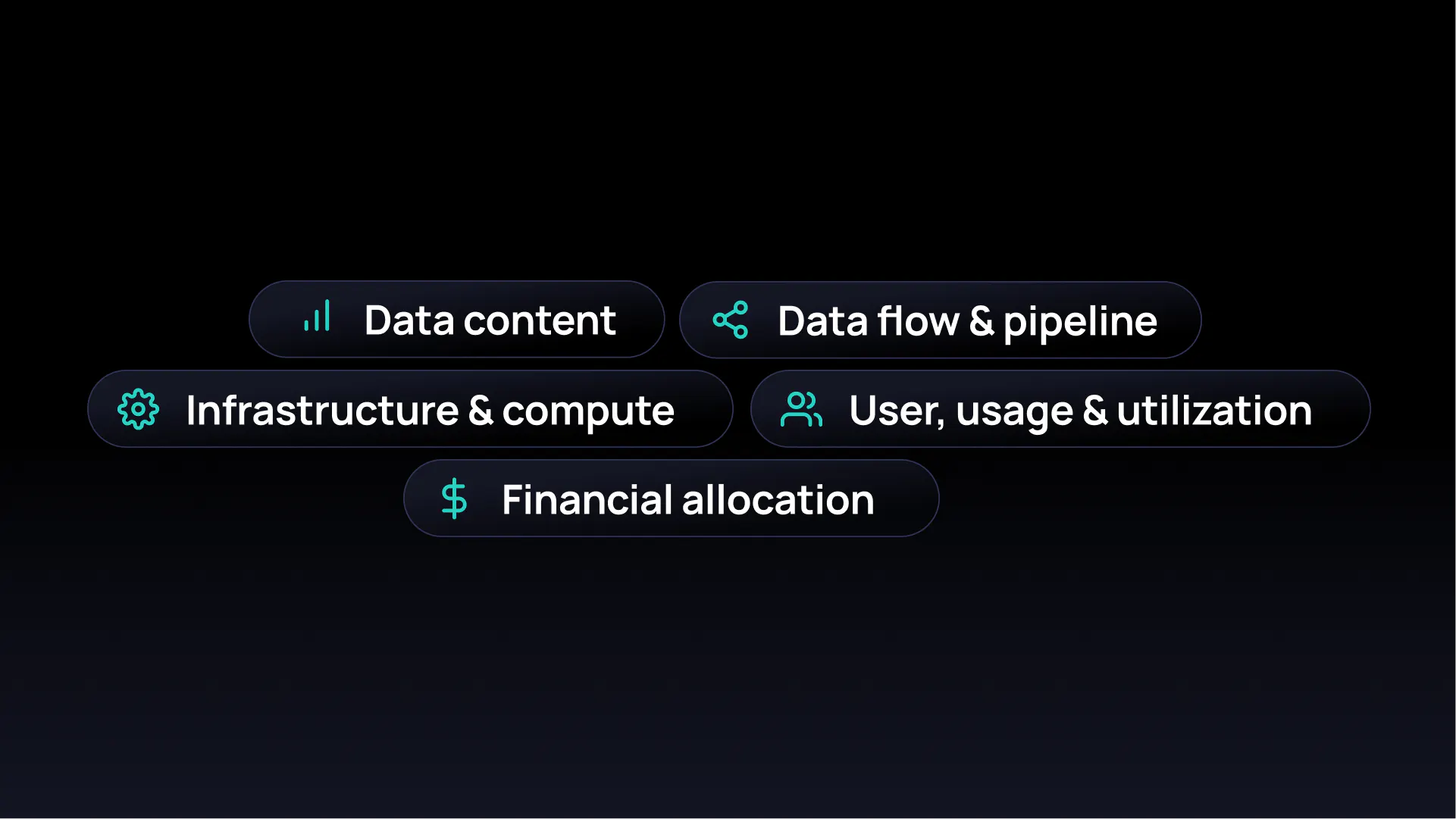
Gartner recognized Validio for coverage across all five observation categories the report defines: data content, data pipeline, data infrastructure, data lineage, and cost allocation. That breadth is intentional.
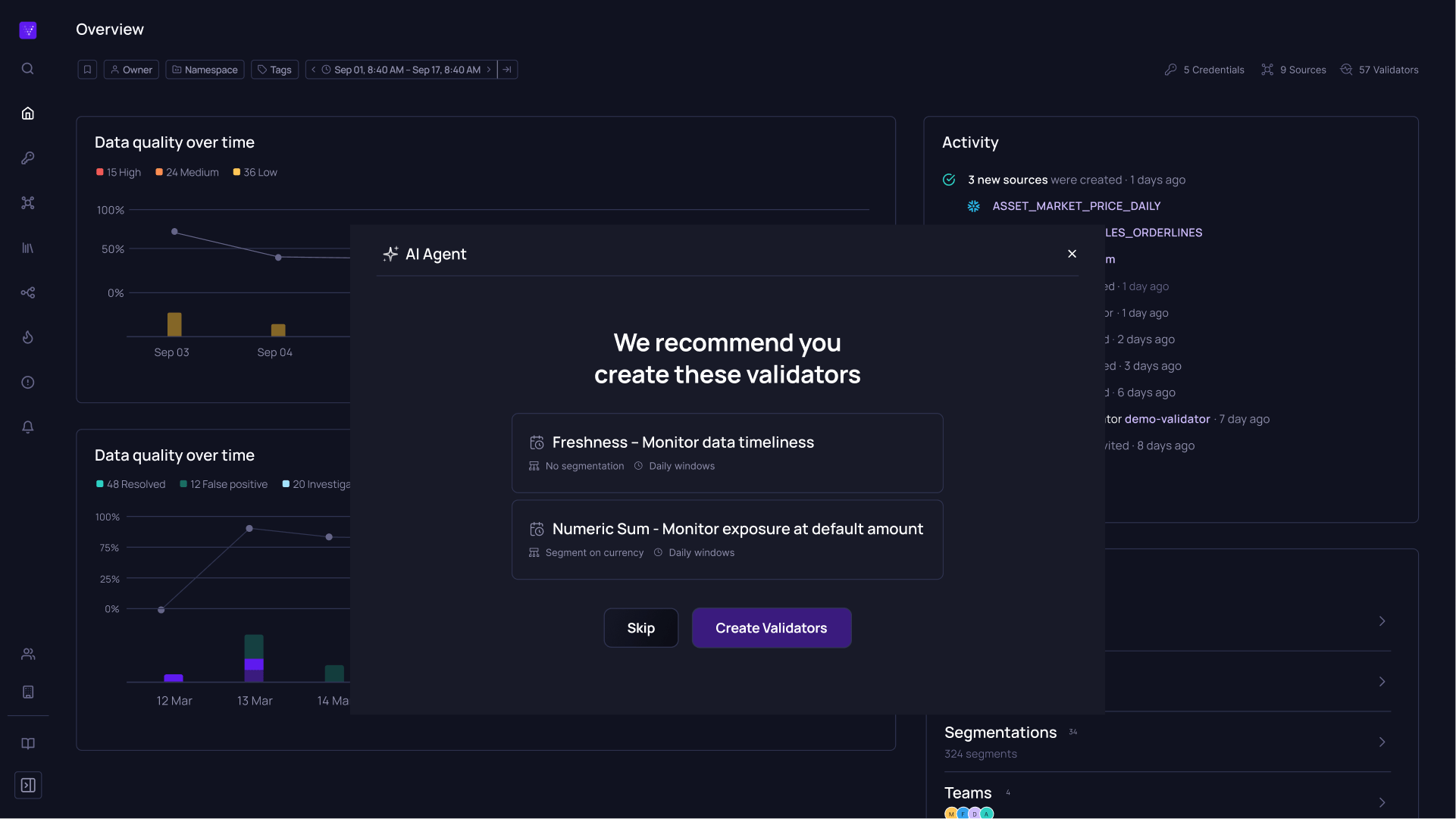
We built Validio as an agentic data management platform - not a monitoring tool with AI features bolted on. The distinction matters. When a data issue surfaces, we don't just alert. We trace lineage to identify root cause, apply AI-powered thresholds to distinguish signal from noise, and integrate with incident management workflows like ServiceNow so resolution happens in the systems teams already use.
The 80+ out-of-the-box monitors are there so teams can get to value fast without spending weeks configuring rules. The AI recommendations layer is there so monitoring coverage scales with the data, not with headcount.
The bottom line
The 2026 Gartner Market Guide confirms that data observability is no longer optional. The question for most organizations isn't whether to invest - it's how to do it in a way that actually reduces noise, closes coverage gaps, and keeps pace with the demands of AI.
Being named in this report reflects the work we've been doing. It also raises the bar for what we need to keep building. If you're evaluating your observability strategy, the full Gartner report is worth reading - it's one of the more honest assessments of where the category is and where it needs to go.
If you have a Gartner account, the full report is available here.
Gartner, Market Guide for Data Observability Tools, Melody Chien, Michael Simone, 23 February 2026.
Gartner is a trademark of Gartner, Inc. and/or its affiliates.
Gartner does not endorse any company, vendor, product or service depicted in its publications, and does not advise technology users to select only those vendors with the highest ratings or other designation. Gartner publications consist of the opinions of Gartner’s business and technology insights organization and should not be construed as statements of fact. Gartner disclaims all warranties, expressed or implied, with respect to this publication, including any warranties of merchantability or fitness for a particular purpose.